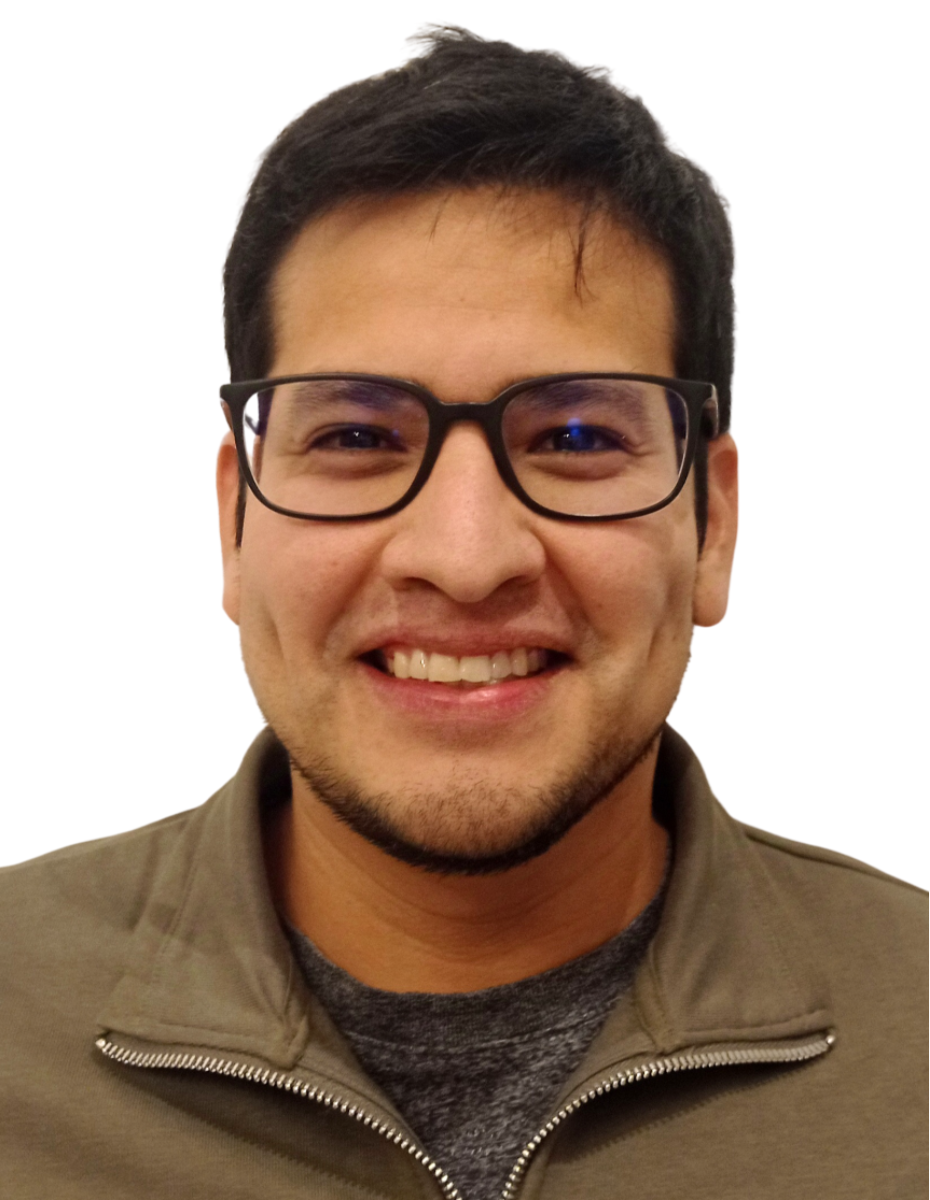
About me
I am an Associate Professor (Maître de Conférences) at IMT Mines Alès, where I am a member of the SyCoIA (Complex Systems and Artificial Intelligence) research unit and the CORTEX (COntext-aware, RobusT and EXplainable AI) research theme. My research focuses on trustworthy and multimodal artificial intelligence, with particular interest in medical imaging and biomedical applications. I develop and evaluate AI methods that are robust, explainable, uncertainty-aware, and capable of operating reliably in complex and changing environments, with a strong emphasis on their translation to real-world applications.
Previously, I was a researcher at LaTIM (UMR 1101 INSERM, Brest, France), where I worked on artificial intelligence for medical image analysis and computational modeling. I hold a Ph.D. in Biomedical Engineering from Universidad Politécnica de Madrid, an M.Sc. in Systems and Services Engineering for the Information Society from the same institution, and a Bachelor's degree from Escuela Superior Politécnica del Litoral (ESPOL), Guayaquil, Ecuador.
My research interests span deep learning, computer vision, multimodal learning, foundation models, and trustworthy AI. A central part of my work investigates the reliability and generalizability of AI systems, including uncertainty estimation, robustness to domain shifts, explainability, model auditing, and quality assessment. I am particularly interested in understanding when and why AI models fail, how these failures can be detected and mitigated, and how human knowledge and interaction can be incorporated into AI systems to support more reliable decision-making. These methodological questions are explored primarily in medical imaging and oncology, including multimodal imaging, segmentation, quantitative biomarker extraction, and clinical decision support, while increasingly extending to other complex application domains.
More broadly, my research aims to contribute to robust, explainable, adaptive, and human-centered AI systems, bridging methodological advances in artificial intelligence with their validation and deployment in real-world environments.
📰 News!
🏆 New Project: TWIN-OPHTHALMO
2027: TWIN-OPHTHALMO, a Horizon Europe Twinning project, will strengthen research excellence and innovation capacity in artificial intelligence for ophthalmology through collaboration between the Slovak University of Technology in Bratislava (STU), Lappeenranta-Lahti University of Technology (LUT), and Institut Mines-Télécom (IMT).
🔗 Project summary: Read about TWIN-OPHTHALMO
📄 Paper Alert
April 2026: Our article Temporally Consistent and Controllable Video Generation of 2D Cine CMR via Latent Space Motion Modeling has been accepted to ISBI 2026 🎉
🔗 Conference Paper: Read on HAL
🎤 Interview Highlight
May 2026: You can find my interview for the PINKCC Challenge at the link below, where I discuss our approach and contributions.
🔗 Interview: Read the interview
📄 Paper Alert
November 2025: Our article Exploring learning transferability in deep segmentation of colorectal cancer liver metastases has now been published in Computers in Biology and Medicine 🎉
🔗 Journal Paper: Read on ScienceDirect
June 2025:
🏆 3rd Prize Winner in the PINKCC Challenge
🔗 IMT Mines Alès News | 💼 LinkedIn Post
📄 Paper Alert
June 2025: Our article Towards More Reliable Prostate Cancer Detection: Incorporating Clinical Data and Uncertainty in MRI Deep Learning has now been published in Computers in Biology and Medicine 🎉
Congrats to Kamilia for this great work!!!
🔗 Journal Paper: Read on ScienceDirect
January 2025: Three papers have been accepted to ISBI 2025 🎉
- Advancing treatment response assessment of hepatic metastases using AI-driven volumetric analysis
- Instance-aware deep learning for liver metastasis segmentation
- PI-RADS inspired architecture: A new deep learning approach to detect clinically significant prostate cancer on MRI
Congrats to Marwan and Kamilia!!!
January 2025: Our dataset paper "GIRAFE: Glottal Imaging Dataset for Advanced Segmentation, Analysis, and Facilitative Playbacks Evaluation" has been accepted in Data in Brief
🔗 GitHub Repository: GIRAFE
🔗 Journal Paper: Read on ScienceDirect